
- By KattaAgro
- April 18, 2026
- Cow Dung Products
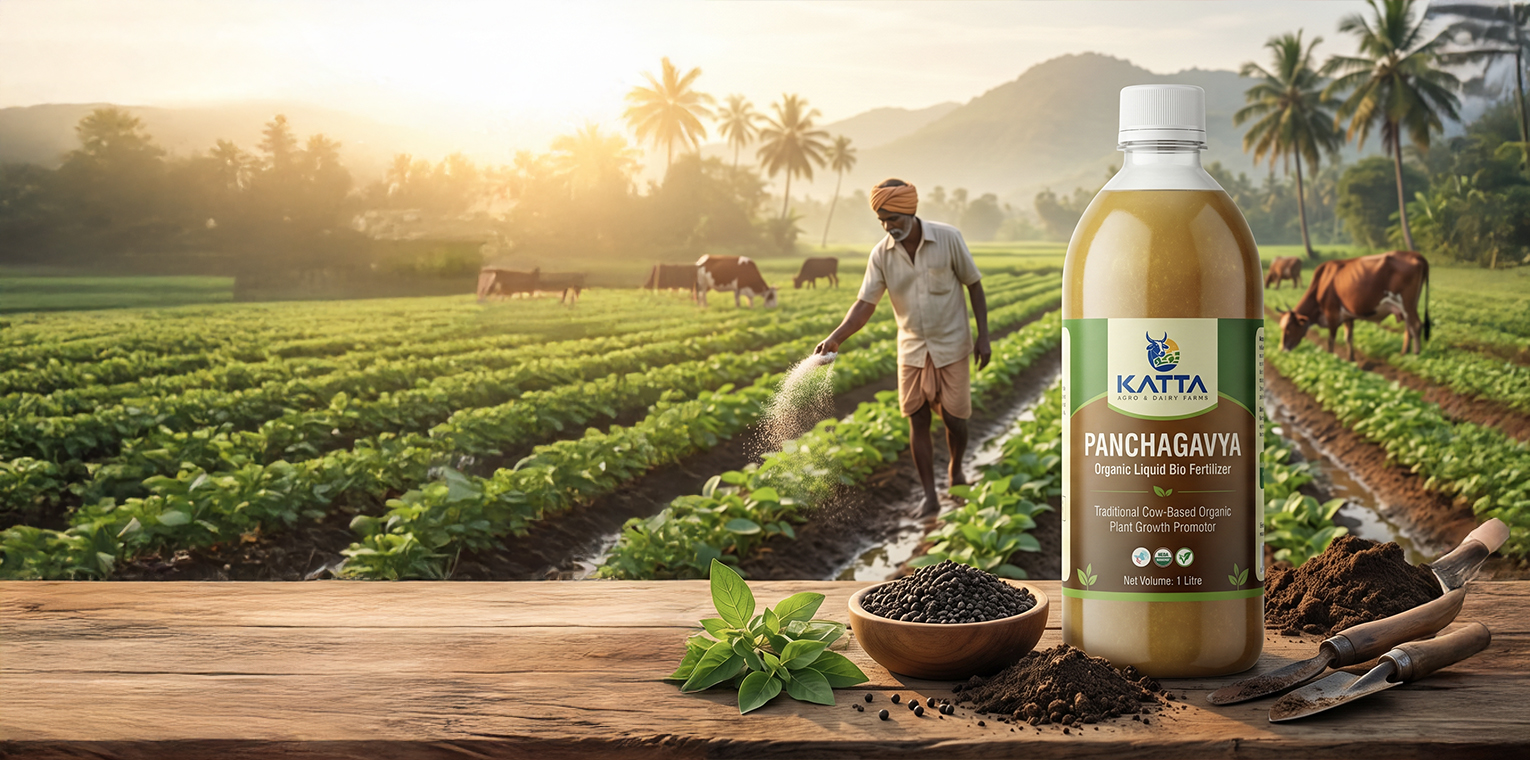
Panchagavya is a traditional bio-formulation prepared from five cow-derived inputs—milk, curd, ghee, urine, and dung. Originating from ancient Indian practices, it is now gaining attention in sustainable and organic agriculture. While its agricultural applications are increasingly supported by field-level evidence, its use in human health remains largely traditional and requires careful scientific validation.
Agricultural Applications
Panchagavya is widely recognized as a natural bio-stimulant that enhances plant growth and soil health. Farmers and field studies report improvements in:
- Seed germination and root development.
- Vegetative growth and flowering.
- Overall crop vigor.
Its effectiveness is linked to the presence of beneficial microbes, enzymes, and trace nutrients.
It also plays a key role in soil health enhancement by increasing microbial activity, improving soil structure, and supporting nutrient cycling. Although it supplies small amounts of essential nutrients like nitrogen (N), phosphorus (P), and potassium (K), it is best used as a supplementary input rather than a complete fertilizer.
In addition, Panchagavya provides mild pest and disease resistance, helping strengthen plant immunity. However, it should not replace targeted pest control methods in severe infestations.
Farm-level results often indicate improved yields and better produce quality, including enhanced taste, aroma, and shelf life.
Livestock Applications
In traditional farming systems, Panchagavya is sometimes used in diluted form as a livestock supplement. It is believed to:
- Support digestion.
- Improve general immunity.
Some farmers also report improvements in milk yield and quality, although results depend heavily on overall farm management practices.
Environmental Significance
Panchagavya is an eco-friendly and biodegradable input, making it suitable for low-input and organic farming systems. It supports:
- Reduced dependence on synthetic chemicals.
- Lower soil and water pollution.
By utilizing cow by-products, it promotes circular agriculture and efficient waste recycling, which is especially valuable in integrated farming models.
Human Health: A Cautious Perspective
In traditional systems like Ayurveda, Panchagavya has been associated with benefits such as immunity support, detoxification, and digestive health.
However, from a scientific standpoint:
- Evidence is limited and largely anecdotal.
- There is a lack of rigorous clinical validation.
- Consumption should only be considered under qualified medical supervision.
Practical Considerations
To ensure effectiveness and safety:
- Preparation quality must be standardized.
- Proper fermentation and dilution are essential.
- Overuse may negatively affect plants or soil balance.
- Regulatory acceptance varies across regions.
Conclusion
Panchagavya holds strong potential as a sustainable agricultural input, particularly in improving soil health and crop productivity. Its applications in livestock show moderate promise, while its role in human health remains traditional and scientifically unverified.
With proper standardization and scientific application, Panchagavya can serve as a cost-effective, eco-friendly solution for modern organic farming systems.